

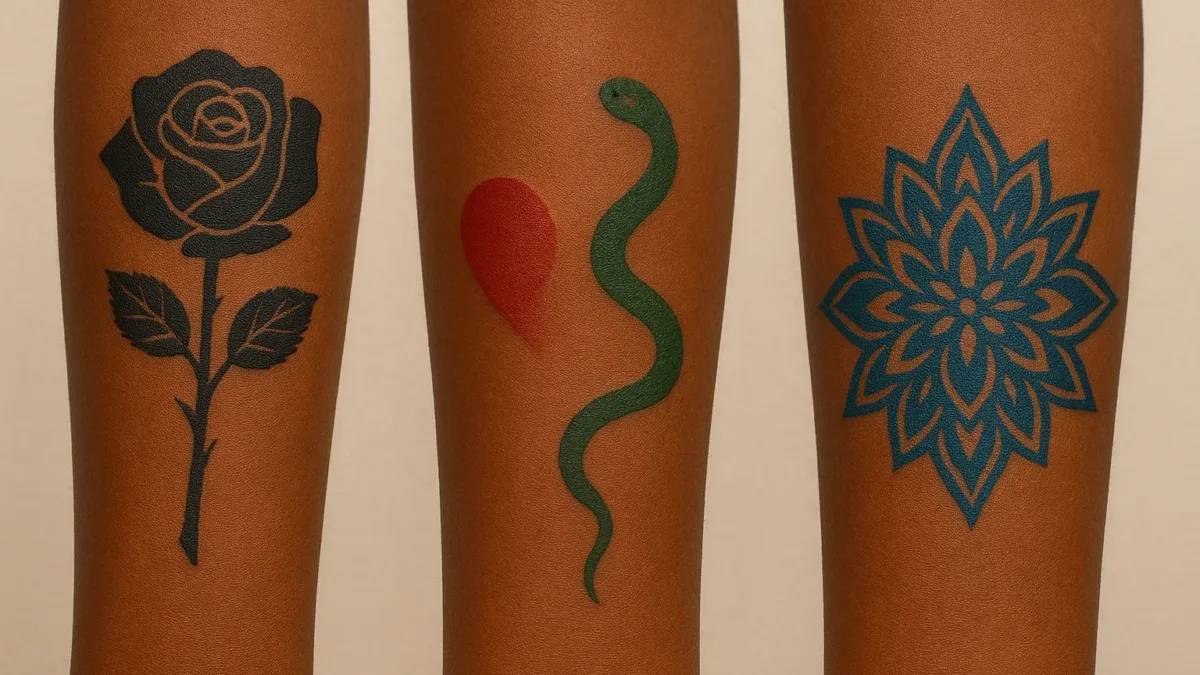
A tattoo may look like simple body art, but your body sees the procedure differently.
Every tattoo needle punctures the skin hundreds or thousands of times. With each puncture, it pushes pigment into the dermis, the skin layer beneath the surface.
Your body immediately responds to these tiny injuries. Blood vessels, immune cells and skin cells become involved in the healing process.
At the same time, some tattoo pigment remains trapped inside the skin. This is what allows the tattoo to remain visible for years.
However, the story does not end once the artist wipes away the excess ink. Your immune system continues interacting with the pigment long after the tattoo has healed.
For anyone considering a tattoo in Nigeria, understanding what happens beneath the skin can help you make a safer decision.
Your body treats tattooing as an injury
The outer layer of your skin provides an important barrier against bacteria and other harmful substances.
A tattoo needle repeatedly breaks that barrier.
During the process, the needle penetrates the skin and deposits ink into the dermis. This deeper layer contains blood vessels, nerves, collagen and other structures.
The repeated punctures trigger your body’s normal wound-healing response.
Blood vessels around the area can widen, causing temporary redness and warmth. Immune cells also move toward the damaged skin.
These cells help protect the wound from microorganisms that could cause an infection.
This explains why a new tattoo can feel sore, warm or slightly swollen.
Some tenderness and redness can occur during the early healing period. However, symptoms should generally improve rather than become progressively worse.
Your skin also begins repairing itself.
New skin forms around the tattooed area while the damaged surface gradually heals. You may notice peeling, dryness or itching as this happens.
Scratching or picking the area can interfere with healing. It can also introduce bacteria into the damaged skin.
Therefore, proper aftercare matters almost as much as what happens during the tattooing itself.
Why does the ink stay there?
Your body is constantly removing damaged cells and foreign substances.
So why does tattoo ink remain?
The answer involves the structure of tattoo pigments and your immune system.
Some immune cells called macrophages attempt to engulf foreign particles. When tattoo pigment enters the dermis, macrophages can absorb some of it.
However, they do not necessarily destroy the pigment.
Some pigment remains inside these cells. When an ink-containing macrophage eventually dies, other immune cells can take up the released pigment.
This repeated process helps keep the pigment in the skin.
That is one reason tattoos can remain visible for decades.
The ink does not simply sit untouched in one place, though.
Research has found that tattoo pigments and related particles can move through the body. Some particles can travel through lymphatic pathways and accumulate in nearby lymph nodes.
Lymph nodes are part of your immune system. They help filter substances and support the body’s defence against infections.
Finding tattoo pigment in lymph nodes does not automatically mean that tattoos are harmful.
It does, however, show that tattoo ink can interact with parts of the body beyond the visible tattoo.
This is one area researchers continue to study.
What can your body react to?
Not every tattoo causes complications.
However, your body’s response can vary depending on the individual, the pigment and the conditions surrounding the procedure.
One possible problem is an allergic reaction.
Some people develop redness, itching, swelling or rashes around tattooed skin. These reactions can sometimes appear soon after tattooing.
In other cases, they may develop much later.
The pigment itself can contribute to a reaction. Products used during the tattooing or aftercare process can also irritate sensitive skin.
Therefore, do not assume every rash around a tattoo is simply part of normal healing.
Infections are another concern.
Because tattooing breaks the skin, bacteria have an opportunity to enter the body. Contaminated equipment, poor hand hygiene, unsafe working surfaces or contaminated ink can increase this risk.
A tattoo infection can cause worsening redness, swelling, pain, warmth or discharge.
Fever can also occur when an infection becomes more serious.
This makes the choice of tattoo artist particularly important.
A clean-looking studio is helpful, but proper hygiene involves specific practices. Needles should be sterile and intended for single use where applicable.
Equipment that is reused must be appropriately sterilised. Artists should also use clean gloves and maintain hygienic working surfaces.
This matters whether you are getting a small tattoo in Lagos or a larger design in Abuja, Port Harcourt or another Nigerian city.
The location may change, but the biological risks remain.
Another issue is scarring.
Some people develop excessive scar tissue after skin injuries. This can result in raised scars known as keloids.
Anyone who has previously developed keloids after cuts, piercings or other injuries should consider this risk before getting tattooed.
What about the long-term effects?
The immediate effects of tattooing are relatively well understood.
However, researchers are still investigating some long-term questions.
Scientists have found tattoo-related particles in lymph nodes. Researchers are also studying how certain tattoo pigments and their chemical components interact with the body over long periods.
Some studies are examining possible relationships between tattoos and certain health conditions.
However, an association does not automatically prove that tattoos cause a disease.
This distinction is important.
It would be inaccurate to claim that tattoos are completely risk-free. It would also be inaccurate to claim that getting a tattoo will definitely cause serious long-term illness.
The available evidence does not support such certainty.
Instead, tattooing should be viewed as a procedure that carries potential risks. Good hygiene can reduce some of those risks, but it cannot eliminate every possible reaction.
Your behaviour after getting the tattoo also matters.
Keep the area clean and follow appropriate aftercare instructions. Avoid unnecessary touching while the skin heals.
Do not scratch peeling skin or remove scabs prematurely.
You should also be careful about exposing a fresh tattoo to environments that could introduce bacteria.
Most importantly, pay attention to changes that seem abnormal.
Increasing pain, spreading redness, significant swelling, pus or fever should not be ignored. These symptoms can indicate an infection requiring medical assessment.
A tattoo can be beautiful, meaningful or simply a form of personal expression.
Still, beneath the artwork, your body is carrying out a complex biological process.
The needle damages the skin. Your immune system responds. Healing begins. Some pigment becomes trapped in immune cells, while some particles can travel beyond the tattooed area.
Understanding this process does not mean you should avoid tattoos.
Instead, it shows why choosing a hygienic professional and taking proper care of your skin are essential.
A tattoo may be permanent on your skin, but your body’s response to it continues long after the artist finishes the design.













Join the conversation