

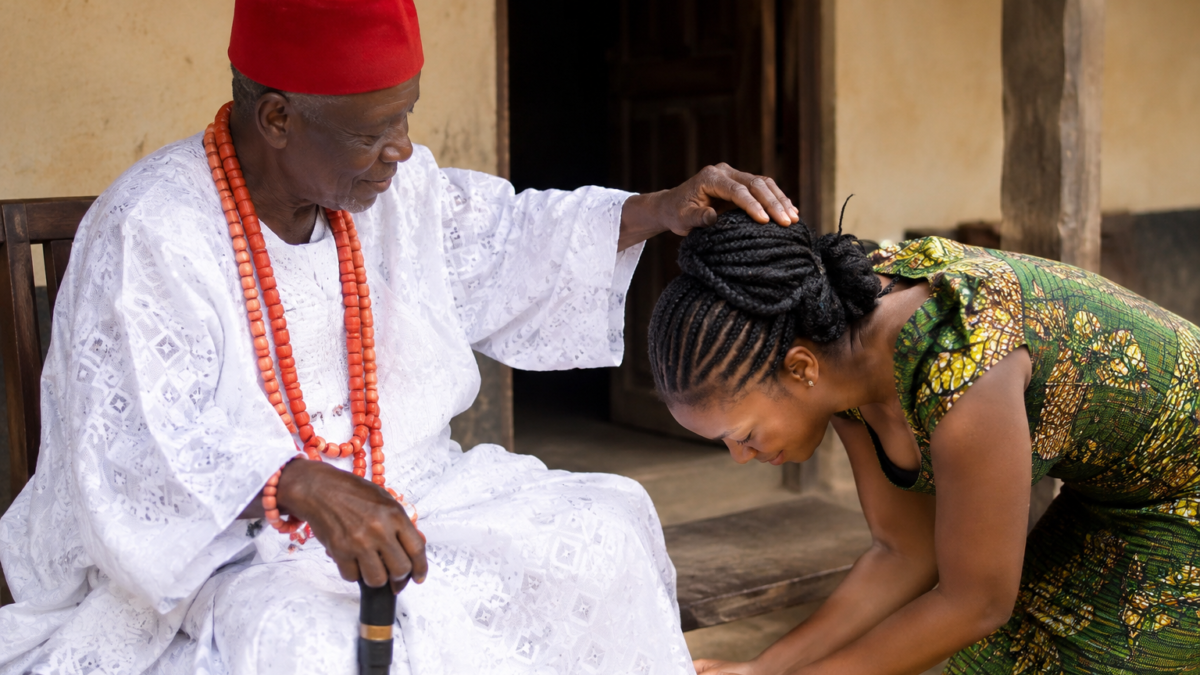
Respect remains one of the strongest values in Nigerian society.
From childhood, Nigerians are taught to greet elders, listen when adults speak and use appropriate titles. These lessons often continue into adulthood and influence family, social and workplace relationships.
However, the way respect is understood is changing.
Younger Nigerians are increasingly questioning whether age should automatically command obedience. They are also asking whether disagreement should always be treated as disrespect.
This does not necessarily mean respect is disappearing. Instead, the expectations surrounding respect are being reconsidered.
How Nigerians Learn Respect
For many Nigerians, lessons about respect begin at home.
A child may be reminded to greet visitors before sitting down. They may be taught to say “sir” or “ma” when addressing older people. In some families, children are expected to kneel or prostrate when greeting elders.
These practices vary across Nigeria’s different ethnic groups and communities.
In Yoruba communities, for example, prostration and kneeling can form part of traditional greetings. Other communities have their own ways of showing honour and courtesy.
The underlying principle is similar.
Young people are expected to acknowledge age, experience and seniority. Elders, in turn, are traditionally expected to guide younger people.
Respect also extends beyond the family.
Children are taught to show courtesy to neighbours, teachers, religious leaders and other adults. As they grow older, these expectations can influence how they interact with colleagues, employers and community leaders.
Titles also carry significant social meaning.
Words such as “sir,” “ma,” “oga” and “madam” are commonly used in everyday Nigerian interactions. They can express courtesy, particularly when there is an age or professional difference.
However, respect has sometimes become closely connected to social status.
A person with wealth, political influence, professional authority or seniority may receive greater deference. This can create questions about whether people are respecting the individual or simply their position.
That distinction is becoming increasingly important.
The Younger Generation Is Asking Different Questions
For decades, questioning an elder could easily be interpreted as disobedience.
Today, many younger Nigerians are challenging that assumption.
A young person may respect their parents while disagreeing with their opinions. An employee may respect their manager while questioning a workplace decision.
A child may love and honour a parent while asking why a particular rule exists.
This shift is especially visible among younger adults who have grown up with greater access to information.
Social media, international exposure and changing workplace cultures have introduced Nigerians to different ideas about authority and personal boundaries.
Consequently, some young Nigerians no longer believe age should automatically determine who is right.
They may still greet their elders and observe important cultural traditions. However, they increasingly want respect to be mutual.
For them, respecting an older person does not necessarily mean accepting every instruction without question.
This distinction is important because disagreement and disrespect are not always the same thing.
Someone can disagree with an elder without insulting them. Similarly, someone can challenge a decision without attacking the person who made it.
The manner of communication matters.
A calm disagreement can preserve dignity on both sides. An insult, humiliation or deliberate disregard for another person’s dignity is different.
When Respect Becomes Fear
There is another side to Nigeria’s traditional approach to respect.
Sometimes, the expectation of respecting elders can discourage younger people from speaking honestly.
A young person may witness inappropriate behaviour but remain silent because confronting an older person could result in being called rude.
The same situation can occur at work.
A junior employee may notice a serious mistake but hesitate to mention it. They may fear that correcting a senior colleague will be interpreted as challenging authority.
This can create problems.
Respect should not prevent people from communicating important information. It should not stop employees from raising legitimate concerns or children from reporting harmful situations.
There is also a difference between obedience and respect.
A younger person can listen to an elder without agreeing with everything they say. Likewise, an employee can follow workplace rules while still asking reasonable questions.
Healthy relationships need both courtesy and accountability.
This is where the conversation around respect becomes more complicated.
Older Nigerians may see certain traditional behaviours as signs of good upbringing. Younger Nigerians may see some of those same behaviours as unnecessary displays of hierarchy.
Both perspectives come from different experiences.
For older generations, respect may represent discipline, family values and social order. For younger people, respect may increasingly mean recognising the dignity of everyone involved.
The disagreement is therefore not always about whether respect matters.
It is often about what respect should look like.
Respect in Nigerian Families and Society
Family remains one of the most important places where this conversation happens.
Parents may expect their children to follow traditional forms of greeting and communication. Adult children, however, may want more freedom to express disagreement.
This can become particularly complicated when children become financially independent.
A person who has started working, paying their bills and making independent decisions may still be expected to obey every instruction from an older relative.
That expectation can create tension.
The challenge is finding a balance between family authority and individual responsibility.
Parents can maintain their role without dismissing their children’s opinions. Adult children can express disagreement without insulting their parents.
The same principle applies outside the family.
Respecting neighbours, strangers, teachers, religious leaders and community members remains important. However, courtesy should not depend entirely on age, wealth or social position.
A cleaner deserves basic respect.
A security guard deserves basic respect.
A young employee deserves basic respect.
An older person deserves basic respect.
Respect becomes stronger when it is not reserved for people considered powerful.
Respect in the Nigerian Workplace
The workplace provides another clear example of this changing culture.
Traditional Nigerian workplaces often operate around hierarchy. Junior employees are expected to respect senior employees and follow established lines of authority.
There is nothing inherently wrong with workplace hierarchy.
Organisations need clear responsibilities and decision-making structures.
Problems arise when hierarchy prevents communication.
An employee should be able to raise a concern professionally. A manager should be able to receive constructive criticism without treating every disagreement as insubordination.
Likewise, employees should understand that professional disagreement does not remove the need for courtesy.
A young worker can challenge an idea without insulting their manager. A manager can correct an employee without humiliating them.
This creates a healthier understanding of respect.
It places emphasis on conduct rather than simply age or position.
The same principle can apply to leadership.
A senior person earns trust not only through their title but also through how they treat others. Authority becomes more meaningful when it is accompanied by fairness, patience and accountability.
Is Respect Disappearing or Evolving?
The debate about respect in Nigeria is unlikely to disappear.
Traditional greetings, titles and expectations around seniority remain important parts of Nigerian culture. At the same time, younger Nigerians are questioning some practices that previous generations accepted without debate.
This does not necessarily mean one generation values respect more than another.
Instead, the definition is becoming broader.
For some Nigerians, respect means greeting elders, accepting correction and observing cultural traditions.
For others, it also means listening to younger people, respecting personal boundaries and allowing disagreement without humiliation.
Both ideas can exist together.
Nigeria does not have to abandon its culture of respect to accommodate changing social attitudes.
Instead, respect can evolve while retaining its central values of courtesy, humility and consideration.
Age can still deserve recognition without becoming a permanent exemption from accountability.
Authority can still be respected without making questioning unacceptable.
Children can honour their parents while developing independent opinions. Employees can respect their superiors while contributing ideas.
Ultimately, a strong culture of respect should make relationships better for everyone.
It should encourage courtesy without demanding silence, humility without demanding helplessness and obedience without removing personal dignity.
That may be the direction in which Nigeria’s understanding of respect is gradually moving.













Join the conversation